


Press Enter to search

%20(2).jpg)
Most injectable doses begin the same way: a needle goes into a vial or ampule, medication is drawn into a syringe, and the preparation moves to the patient. That first step happens millions of times a day in U.S. hospitals, and in many facilities it is still performed with a conventional sharp needle, even though the drawing-up step never touches a patient. Blunt fill needles exist to remove that unnecessary sharp from the workflow. This guide covers what blunt fill needles are, when a filter version is the better choice, and how to select gauge and length for your medication preparation areas.
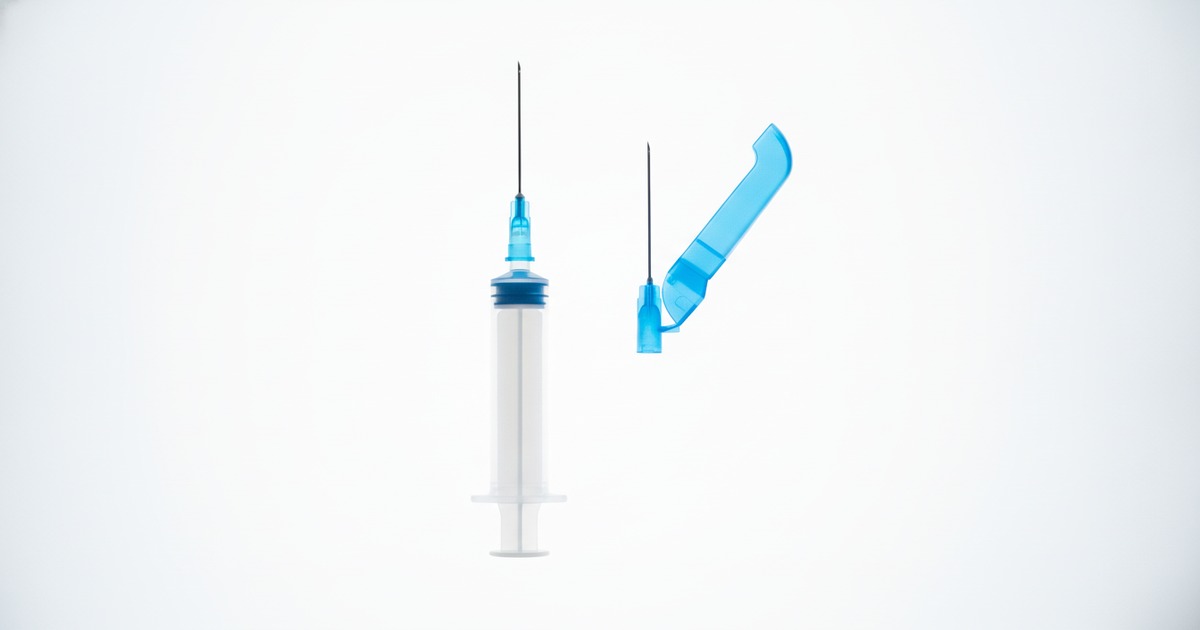
A blunt fill needle is a blunt-tip, wide-bore needle that attaches to a standard syringe and is used to draw medication out of a vial or ampule during preparation. The tip is designed to pass through a rubber vial septum without the sharpened point that causes accidental punctures. Because there is no sharp, a slip during preparation is far less likely to break skin.
The RELI® Blunt Fill Needle pairs that blunt tip with an angled bevel that reduces coring of the vial stopper, so fewer rubber fragments end up in the drawn dose. Each needle is sterile, single-use, free of polyvinyl chloride (PVC), and not made with natural rubber latex.
One rule applies to every device in this category: blunt fill needles are for preparation only. Clinical guidance directs that the drawing-up needle be removed and replaced with an injection needle appropriate for the route and site before the dose is administered. A blunt fill needle is never used to inject a patient.
The Centers for Disease Control and Prevention (CDC) estimates that approximately 385,000 needlesticks and other sharps-related injuries occur among hospital-based healthcare personnel each year. Each injury carries the risk of bloodborne pathogen exposure, and each one is expensive even when no infection results: a U.S. economic study estimated an average of $596 per cost-generating needlestick in 2004 dollars, with 96 percent of the medical portion spent on testing and prophylaxis rather than treatment.
Regulation points in the same direction. The Needlestick Safety and Prevention Act of 2000 led to a revised Occupational Safety and Health Administration (OSHA) Bloodborne Pathogens Standard that requires employers to use engineering controls that eliminate or minimize exposure, to document annually that they have considered and implemented appropriate, commercially available safer medical devices, and to solicit input from frontline clinical staff in device selection.
The logic for medication preparation is straightforward: the sharp adds no value at the vial. A meta-analysis of safety-engineered syringes found that devices with injury-prevention features were associated with an estimated 46 percent relative reduction in needlestick injuries. Substituting a blunt device where no injection occurs follows the same hierarchy-of-controls principle in its simplest form — remove the hazard instead of managing it.
The choice between the two versions depends on the container the medication comes from.
A blunt filter needle contains a membrane, typically 5 microns, that traps particulate as the medication is drawn. A separate review of the filtration literature reported an 83 percent decrease in particles larger than 10 microns when drugs were withdrawn through a filter needle. Many facilities set policy to use a filter needle or filter straw for every glass ampule draw, and some drug labels require it. The line includes the RELI® Blunt Fill Needle with Filter, Sterile, 18G x 1.5" (SKU F-BFN18G151) for exactly this use. As with the standard version, the filter needle is swapped for a fresh injection needle before administration, which also helps prevent captured particles from being flushed back out of the filter.
Blunt fill needles are sized for speed rather than patient comfort, so they run much larger than injection needles. Three factors drive selection.
The RELI® range covers sterile 16G x 1.5 inch, 18G x 1 inch, 18G x 1.5 inch, and 20G x 1 inch configurations. For high-volume preparation areas, the RELI® Blunt Fill Needle with Syringe pairs an 18G x 1.5 inch blunt needle with a pre-attached 3, 5, or 10 mL Luer lock syringe, removing an assembly step; the 3 mL version has a low dead space design that helps reduce retained medication in the hub.
Device substitution works best inside a broader program. CDC safe injection practices treat needles, cannulae, and syringes as sterile, single-use items, so blunt fill needles should be stocked at each preparation point and discarded after a single draw, never reused. The annual safer-device evaluation that the Bloodborne Pathogens Standard already requires is a natural moment to trial blunt fill needles with the pharmacy technicians and nurses who prepare the most doses — their input is not only required, it is what determines whether a device is actually adopted at the bench.
Preparation is only one exposure point. For the wider picture, see our guides on reducing sharps injuries across the facility and on managing the transition period when conventional and safety devices are in use at the same time.
MYCO Medical supplies blunt fill, blunt filter, and pre-attached syringe configurations alongside a full line of needles and syringes for clinical use. If your facility is evaluating safer medication preparation devices for its next annual review, contact our sales team to request evaluation samples and compatibility information for your existing syringe stock.
What is a blunt fill needle used for?
A blunt fill needle is used to draw medication from a vial or ampule into a syringe during preparation. Its blunt tip eliminates the use of a sharp at a step that never involves the patient.
Can a blunt fill needle be used to inject a patient?
No. Blunt fill needles are preparation devices only. After the dose is drawn, the blunt fill needle is removed and replaced with an injection needle appropriate for the route and site.
When should a blunt filter needle be used instead?
When drawing from a glass ampule. Opening an ampule can shed glass fragments into the medication, and a filter needle traps particulate during the draw. Follow the drug labeling and your facility policy, which may require filtration for specific products.
What gauge blunt fill needle should a facility stock?
An 18G needle covers most preparation tasks. A 16G bore helps with viscous medications or faster draws, and a 20G suits small-volume work. Many facilities stock more than one gauge at the preparation bench.
Do blunt fill needles fit standard syringes?
Yes. Blunt fill needles use standard Luer connections and are compatible with most syringes available on the market. Pre-attached needle and syringe combinations are also available where reducing assembly steps matters.
Does OSHA require blunt fill needles?
Not by name. The Bloodborne Pathogens Standard requires engineering and work practice controls that eliminate or minimize exposure, plus a documented annual evaluation of safer devices with frontline input. Many facilities adopt blunt fill needles through that process because removing an unnecessary sharp is one of the most direct forms of exposure control.

%20(1).jpg)
.jpg)